


These days, we're conditioned to expect infinite content and instant access; so, it might seem counterintuitive that more and more people are rediscovering physical media. After all, streaming promises convenience, variety, and speed. Entire libraries of films and television shows are available at the press of a button; no shelves, no cases, no discs to handle.
And yet, many viewers report something surprising: movies and shows simply feel better when experienced on physical media.
This isn’t nostalgia talking. It’s neuroscience.
From attention and memory to emotional engagement and satisfaction, the human brain responds differently to physical media than it does to algorithm-driven streaming. And as research into focus, decision fatigue, and sensory experience grows, it’s becoming increasingly clear why intentional, tactile viewing feels more rewarding; and why high-quality physical playback is quietly enjoying a renaissance.
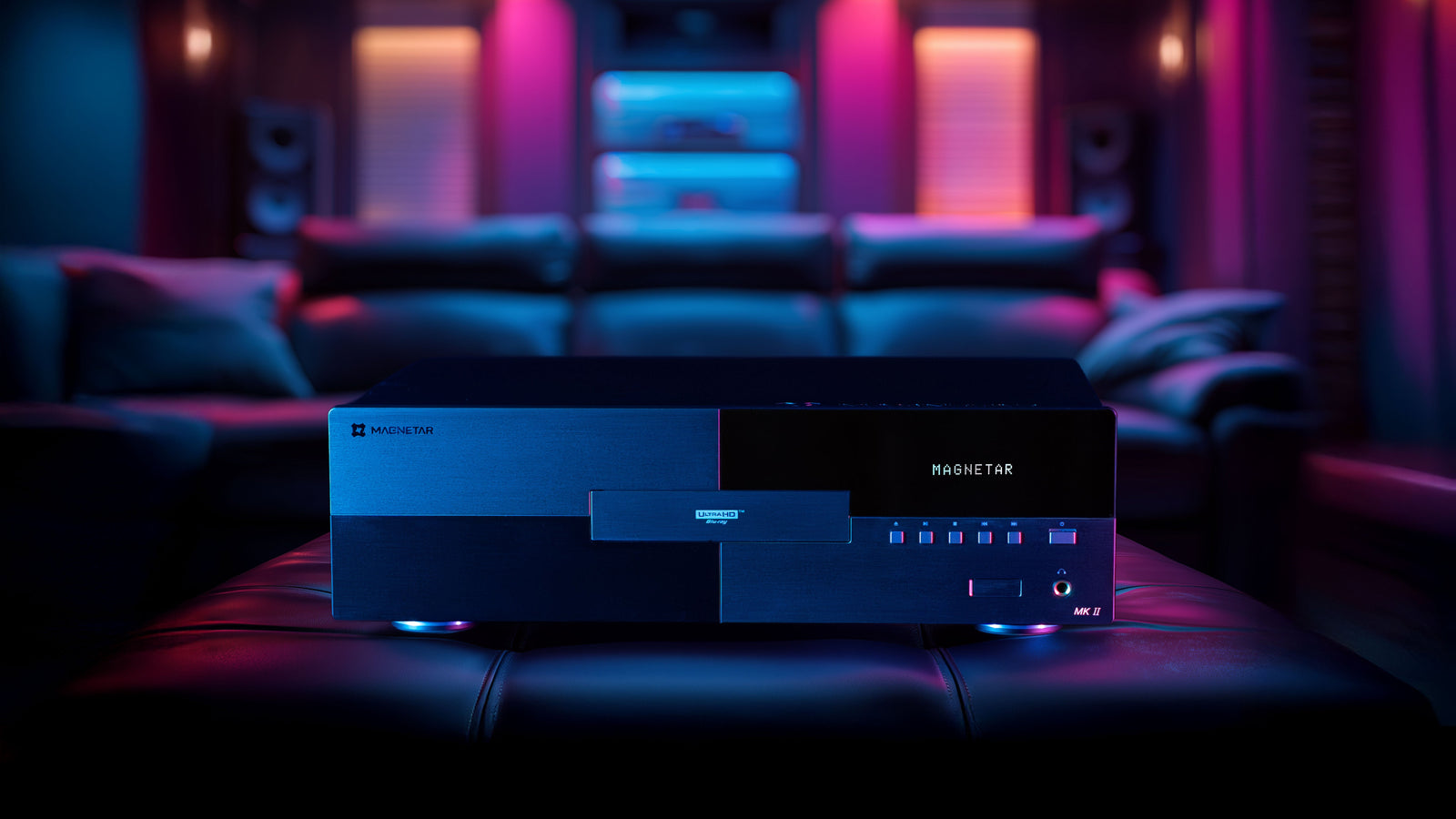
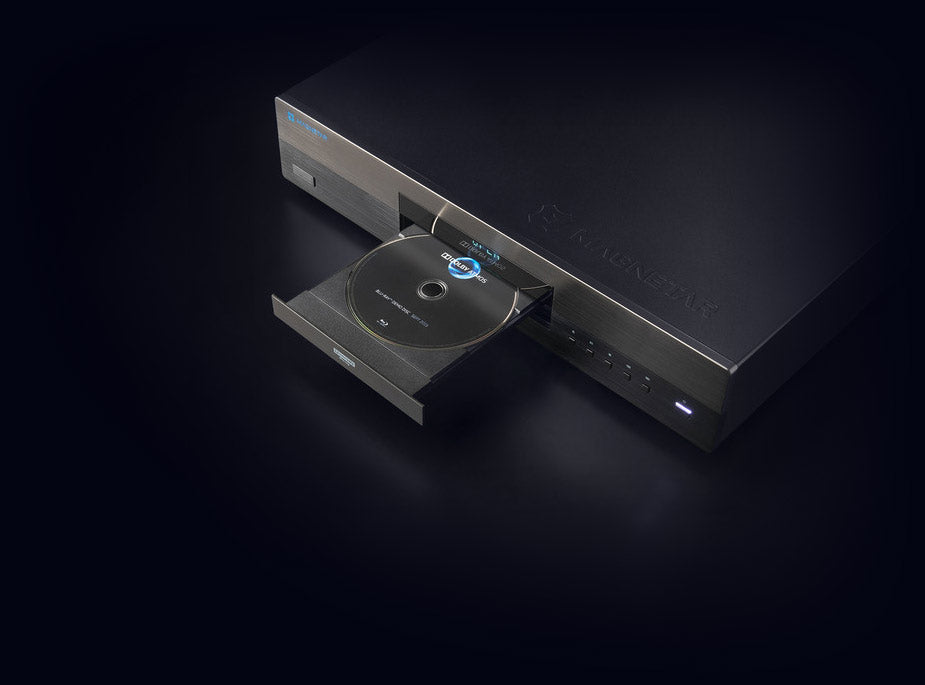
Here at Magnetar, we've made it our mission to ensure the highest level of physical media experience.

The Attention Economy Is Working Against Your Enjoyment
Modern streaming platforms are not designed around optimal viewing experiences. They are designed around engagement metrics.
Autoplay, recommendation carousels, endless thumbnails, and algorithmic suggestions all compete for your attention before, during, and after playback. Even when you’ve selected something to watch, the brain remains in a state of partial alertness, aware that another option is always seconds away.
Neuroscientists refer to this as continuous partial attention, a state where the brain never fully commits to a single task. It’s efficient for multitasking, but terrible for immersion.
Physical media disrupts this cycle.
When you choose a disc, you make a conscious decision. The act of selecting a title, placing it into a player, and pressing play signals to your brain that this is the experience. There is no carousel waiting behind the pause button. No autoplay countdown nudging you toward the next episode.
The result is deeper focus and a more satisfying experience.
Decision Fatigue: Why Choice Exhausts the Brain
One of the paradoxes of modern entertainment is that more choice often leads to less enjoyment.
Psychologists have long studied decision fatigue, the mental exhaustion that occurs when the brain is forced to make too many choices in succession. Streaming platforms exacerbate this effect by offering thousands of options at once, often without meaningful context.
How many times have you scrolled for twenty minutes, only to give up or settle for something that felt “good enough”?
With physical media, the decision space is smaller and more intentional. A curated collection, whether it’s a shelf of favorite films or a carefully chosen library, reduces cognitive load. Instead of evaluating hundreds of options, you engage with a collection you already value.
This shift from infinite choice to curated ownership dramatically improves satisfaction, even before playback begins.
Ritual Matters More Than We Realize
Human beings are ritual-oriented by nature. From morning routines to bedtime habits, rituals create psychological safety and anticipation.
Watching a movie on physical media often becomes a ritual in itself:
- Choosing a film deliberately
- Dimming the lights
- Sitting down with intention
- Pressing play, knowing you’re committing to the experience
These rituals prime the brain for engagement. Dopamine (the neurotransmitter associated with motivation and reward) is released not just during the movie, but before it begins.
Streaming removes many of these cues. When entertainment is always available, it becomes psychologically devalued. Physical media restores a sense of occasion, and the brain responds accordingly.
Tactility and Memory: Why Physical Objects Stick With Us
There’s a reason people remember books they’ve held, records they’ve played, and films they’ve owned more vividly than content they’ve streamed.
Tactile interaction activates additional regions of the brain, particularly those associated with memory formation. Holding a disc case, reading liner notes, and seeing artwork in physical form creates multi-sensory encoding; the brain stores the experience more richly.
This is why physical media often feels more meaningful. It isn’t just content; it’s an object tied to a moment, a place, or an emotion.
Streaming content, by contrast, is transient. Titles appear and disappear. Libraries change without warning. The lack of permanence reduces emotional attachment, and the brain treats the experience accordingly.
Visual and Audio Quality Affect Emotional Response
While streaming technology has improved, it still relies heavily on compression. Bitrate fluctuations, reduced color depth, and lossy audio formats subtly, but consistently, impact the viewing experience.
The human brain is extraordinarily sensitive to visual and auditory cues. Even when viewers can’t consciously articulate the difference, degraded image and sound quality affects emotional processing.
Lossless audio preserves dynamic range, spatial detail, and subtle textures that the brain uses to interpret emotion. Higher-bitrate video maintains shadow detail, color accuracy, and motion integrity; elements that directly influence mood and immersion.
When these details are compromised, the brain works harder to fill in the gaps. Fatigue increases, engagement decreases, and the experience feels flatter; even if the viewer can’t quite explain why.
Physical media preserves the full integrity of the source, allowing the brain to relax and fully absorb the story.
Commitment Changes Perception
There’s a fascinating psychological effect known as the effort justification principle. When we invest time, money, or effort into something, our brains assign it greater value.
Owning a film (selecting it, purchasing it, placing it in a collection) creates a sense of commitment. That commitment increases emotional engagement and satisfaction.
Streaming, by contrast, encourages casual sampling. When content feels disposable, the brain treats it as such. Attention wanders. Phones come out. The experience becomes background noise.
Physical media invites commitment. And commitment leads to meaning.
Why Intentional Viewing Is Making a Comeback
In recent years, broader cultural shifts have reinforced these psychological truths. Subscription fatigue, algorithm burnout, and digital overload have pushed many consumers toward more intentional lifestyles.
People are rediscovering the value of:
- Owning what they love
- Slowing down
- Experiencing art without interruption
- Investing in quality over quantity
Physical media aligns perfectly with this mindset. It offers control, permanence, and respect for the art itself; qualities that resonate deeply in an era defined by excess.
The Role of Playback Quality in the Experience
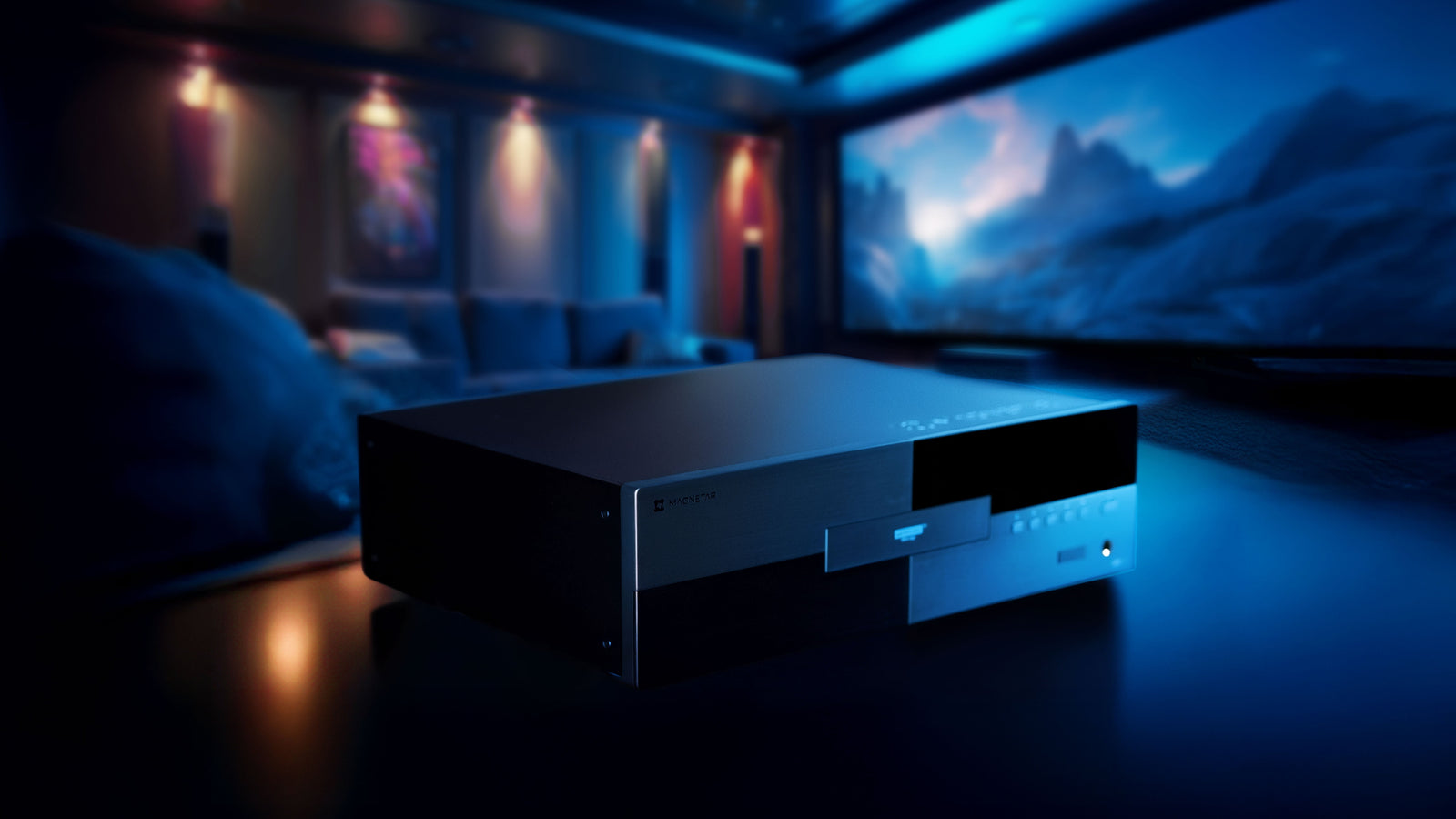
Of course, preserving the benefits of physical media requires playback equipment that honors the format. Magnetar deeply understands this truth.
A high-quality disc player isn’t just about technical specifications, it’s about consistency, reliability, and respect for the source material. Stable playback, accurate color reproduction, and uncompromised audio decoding ensure that what reaches the viewer is exactly what the filmmakers intended.
When the brain isn’t distracted by glitches, compression artifacts, or inconsistent performance, immersion deepens. The technology is forgotten, leaving only the story.
Physical Media as a Form of Presence
At its core, the renewed appreciation for physical media reflects something deeply human: a desire to be present.
The culture of entertainment has become optimized for speed and distraction. But choosing to sit down with a film fully, intentionally, and without interruption, becomes a quiet act of rebellion. It’s a reminder that art deserves attention, and that attention enhances meaning.
Your brain knows this instinctively.
And when you give it the time, space, and quality it craves, it rewards you with a richer, more satisfying experience; one that lingers long after the credits roll.
A Thoughtful Approach to Home Entertainment
For viewers who value intentional experiences, physical media offers something increasingly rare: ownership, permanence, and quality without compromise.
And when paired with the thoughtfully engineered universal disc players offered by Magnetar; which are designed to preserve the integrity of both image and sound, physical media becomes more than a format. It becomes a ritual, a refuge, and a return to truly immersive storytelling.
When confronted with a culture that offers endless, mindless scrolling, sometimes the most radical choice is simply pressing play and staying present.