



Building a great home theater can become an exercise in numbers.
More pixels, more speakers, more watts, higher peak brightness, greater bandwidth, more channels, bigger screens, newer formats...the list goes on and on.
With so many specifications competing for attention, it is easy to assume that improving a home theater simply means upgrading whichever component offers the biggest numbers or buying the most expensive piece of equipment you can afford.
But home theater systems don’t really work that way.
A home theater is a chain, and the experience you ultimately see and hear is dependent on how effectively every component in that chain works together. A spectacular television cannot restore information lost earlier in the signal path, premium speakers cannot compensate completely for poor placement or difficult room acoustics, and an excellent source cannot reach its full potential if something downstream prevents the signal from being reproduced properly.
In other words, nearly every home theater has a weakest link, and finding it may deliver a greater improvement than simply replacing the component you assumed mattered most.

What Is a Home Theater Bottleneck?
The term “bottleneck” is common in computing, where one component can limit the performance of an otherwise powerful system. The same concept applies surprisingly well to home theater. Imagine a system containing a premium 4K display, capable AV receiver, high-quality speakers and a carefully chosen source device.
On paper, everything looks impressive...but suppose the center speaker is buried inside a cabinet. Dialogue clarity may suffer regardless of how expensive the speaker is.
Or perhaps the television is operating with aggressive motion smoothing, sharpening and dynamic contrast enabled. The source image may be excellent, but what appears onscreen can look substantially different from what was originally delivered.
Maybe everything is configured correctly, but an aging or problematic HDMI cable intermittently struggles with the required bandwidth.
Suddenly, the least glamorous component in the system becomes extremely important.
A home theater bottleneck is therefore not necessarily the cheapest component, it's actually whatever prevents the rest of the system from performing as well as it could.
Sometimes, it isn’t even a piece of equipment at all...
Think in Terms of the Entire Signal Chain
One of the best ways to troubleshoot or improve a home theater is to stop thinking about individual products and start thinking about the complete journey of the content.
For video, a simplified chain might look something like this:
Media → source device → HDMI connection → AV receiver or processor → display processing → television/projector → viewing environment
Audio follows a similarly interconnected path:
Media → source device → decoding/processing → amplification → speakers → room → listening position
Every stage is important, but that doesn’t mean every component must cost the same amount or occupy the same performance tier. It simply means that the final result depends on the interaction between them.
This is also why comparing specifications alone rarely tells the complete story of a home theater. You aren’t actually watching a television specification as much as you're watching the result of an entire system.
Bottleneck #1: Your Source
Picture quality discussions frequently begin with the display, but the display can only reproduce the information it receives. That makes the source one of the most important (and sometimes overlooked) parts of the home theater chain.
Different sources may provide different levels of video and audio quality depending on compression, mastering, bitrate, format and playback hardware.
A high-quality 4K Ultra HD Blu-ray can deliver extremely high video bitrates alongside lossless audio formats, yet other sources may rely on greater compression to deliver content efficiently. Neither situation automatically guarantees that something will look good or bad. Mastering quality remains enormously important. But there is a basic principle worth remembering:
Information that never reaches the display cannot be recreated perfectly downstream.
Image processing can sharpen edges, reduce noise, interpolate frames or upscale resolution, and some modern processing is remarkably sophisticated. But processing isn’t the same thing as having the original information available in the first place. For enthusiasts trying to extract maximum performance from a premium display and audio system, source quality therefore deserves serious consideration.
Bottleneck #2: HDMI (Also Known as The Component Everyone Forgets Until Something Breaks)
HDMI cables may be among the least exciting pieces of a home theater...
Until they cause problems.
Modern home theaters may pass high-resolution video, HDR information, multichannel audio and other data between several devices. The connection needs to reliably support the bandwidth and features required by that particular signal path.
When something goes wrong, symptoms can include:
*Intermittent black screens
*Signal dropouts
*Handshake problems
*Flickering
*Missing HDR
*Resolution or refresh-rate limitations
*Audio issues
The important lesson here is that cables should be appropriate, certified where applicable, reliable and suitable for the required bandwidth and installation length.
Which is exactly why Magnetar has partnered with Austere. Austere cables are Magnetar tested and certified for ultimate performance and reliability, as an expensive display cannot compensate for a connection that fails to deliver the intended signal reliably.
Bottleneck #3: Your AVR or Processor
In many home theaters, the AV receiver or processor sits directly in the middle of everything, making it enormously influential. Depending on the configuration, it may handle HDMI switching, audio decoding, bass management, room correction, channel routing, video passthrough and numerous other functions. It also means compatibility is important.
If the display and source support a particular format or capability but an intermediate device does not pass it correctly, the entire chain may effectively be limited by that device.
This is where home theater becomes less about owning products with impressive individual specifications and more about system compatibility. Every component needs to communicate with the next one.
Bottleneck #4: Display Settings
Here’s one of the most interesting home theater bottlenecks, because fixing it may cost absolutely nothing.
A premium television can produce an excellent image while simultaneously being configured in a way that prevents you from seeing it. Modern displays offer enormous numbers of processing options. Depending on the manufacturer, these can include sharpening, noise reduction, motion interpolation, dynamic contrast, color enhancement, automatic brightness adjustment and AI-based picture processing.
Some processing can be useful in certain situations, but the problem occurs when users assume that enabling every enhancement automatically creates a better image.
It doesn’t.
For example, excessive sharpening can create visible halos around objects, heavy motion interpolation can dramatically alter the appearance of film-based content, aggressive noise reduction may remove fine detail along with unwanted noise, etc.
The “weakest link” might therefore be a menu setting.
Before replacing an expensive component, it is worth asking whether the equipment you already own has actually been configured to perform at its best.
Bottleneck #5: Speaker Placement
A $5,000 speaker placed badly can potentially produce a less convincing experience than a far less expensive speaker positioned correctly.
That sounds counterintuitive until you remember that speakers interact directly with the room. Their distance from walls, angle toward listeners, height and relationship to the listening position all influence what you hear.
The center channel for example, is particularly important in movie playback because it commonly carries a significant amount of dialogue. Place that speaker deep inside furniture, obstruct it with objects or position it poorly relative to the listeners, and intelligibility may suffer.
Surround and height speakers also depend heavily on placement. Simply having more speakers doesn’t automatically produce more convincing immersion. They need to create a coherent sound field.
Before deciding that your speakers aren’t good enough, make sure you’ve actually given them a chance to succeed.
Bottleneck #6: The Room Itself
This may be the ultimate invisible component: Your room is part of your audio system whether you want it to be or not.
Sound leaves a speaker and travels toward the listener, but it also interacts with walls, floors, ceilings, furniture, windows and other surfaces. Reflections can reinforce some frequencies while reducing others, and bass response can vary dramatically depending on the dimensions of the room and where the listener sits.
This explains one of the stranger experiences in home theater: You can move several feet and hear substantially different bass response without changing a single setting.
Hard, reflective rooms can also affect dialogue clarity and overall sound quality, but the solution does not necessarily mean transforming your living room into a recording studio. Rugs, curtains, upholstered furniture, thoughtful speaker positioning and room correction can all help depending on the environment. For dedicated rooms, acoustic treatment can take things significantly further.
But the fundamental lesson remains the same: You don’t listen to speakers in isolation, you're listening to speakers interacting with a room.
Bottleneck #7: The Subwoofer
Bass has an unusual ability to expose weaknesses in a system. A powerful subwoofer placed in an unfortunate location can produce uneven bass, overwhelming at one seat and strangely absent at another. Simply buying a larger or more powerful subwoofer doesn’t necessarily solve the problem.
Placement, crossover settings, phase, room dimensions and listening position can all play major roles. This is another example of why home theater upgrades shouldn’t always begin with shopping. Sometimes moving an existing component produces a more meaningful change than replacing it.
Bottleneck #8: Calibration
Imagine assembling a high-performance orchestra and never allowing the musicians to tune their instruments. That’s essentially what can happen when sophisticated home theater equipment is installed but never calibrated.
Audio calibration can help establish speaker distances, levels, crossover behavior and room correction.
Video calibration (or even careful adjustment using appropriate settings and test material) can help ensure the display isn’t unnecessarily altering the image.
Modern equipment frequently includes automated calibration systems, making at least basic setup accessible to far more consumers than it once was. The important part is recognizing that installation and optimization are different things.
Plugging everything in makes the system operate, while calibration helps the system operate together.
Bottleneck #9: The Viewing Environment
Here’s another upgrade that may cost nothing: Turn off the lights entirely, or perhaps just move one.
Ambient lighting can dramatically influence perceived image quality. A bright room can reduce perceived contrast, create reflections and make dark scenes more difficult to see. Direct light hitting the display can undermine some of the advantages offered by excellent black levels and HDR performance.
Projector-based systems are especially sensitive to environmental light. This means that someone considering an expensive display upgrade may sometimes achieve a surprisingly noticeable improvement by addressing the room first. Curtains, blinds, dimmable lighting or simply repositioning a lamp can alter the experience. Your eyes are part of the home theater signal chain too.
Bottleneck #10: Your Seating Position
Where you sit affects both what you see and what you hear. Sit too close to an extremely large screen and the experience may become uncomfortable. Sit too far away and some benefits of higher resolution or increased screen size may become difficult to appreciate.
Audio changes too. Room correction is often optimized around one or more listening positions. Speaker angles are selected relative to seating. Bass response can vary considerably across the room.
The “best seat in the house” isn’t just a cliché. In a carefully configured home theater, there really may be an acoustic and visual sweet spot.
The Most Expensive Component Isn’t Automatically the Most Important
Home theater marketing naturally focuses on products, which is understandable. Products are tangible. They have specifications, model numbers and measurable improvements...but systems are more complicated.
Suppose someone owns a premium display but watches primarily from a low-quality source while sitting in a brightly illuminated room. Which upgrade should come next? A better television? Probably not.
Suppose someone has excellent speakers but struggles to understand dialogue because the center channel is badly positioned. Would more expensive speakers solve the problem? Maybe, but moving the existing center speaker might solve more. This is why identifying the weakest link should happen before deciding what to upgrade.
How to Find the Weakest Link in Your Home Theater
Instead of asking, “What should I buy next?” start with another question:
"What am I actually unhappy with?"
If dialogue is difficult to understand, investigate the center channel, speaker levels, room acoustics and audio settings.
If the picture seems unnatural, examine display processing and picture modes.
If HDR isn’t behaving as expected, investigate the entire signal chain and format compatibility. If bass is inconsistent, experiment with placement, calibration and listening position. If discs or high-quality sources look excellent but another source looks disappointing, the display may not be the problem at all.
Diagnosing the symptom first prevents expensive guesswork. It also makes upgrading far more satisfying because you’re solving a real limitation instead of simply replacing equipment.
Build a Balanced System, Not a Collection of Specifications
The best home theaters aren’t necessarily the systems containing the most expensive version of every component. They’re systems whose components complement one another. A well-balanced theater allows the source to reach the display without unnecessary compromises. It allows speakers to operate effectively within the room. It positions the listener appropriately. It controls the environment. And it uses calibration and configuration to help everything function as one system.
That’s ultimately what separates owning home theater equipment from building a home theater. The equipment matters enormously. But the relationships between the equipment matter too.
Sometimes the Best Upgrade Is Optimization
There is something encouraging about the weakest-link concept: Improving your home theater doesn’t always require spending money. Your next upgrade could be moving a speaker, changing a crossover, turning off an unnecessary video-processing feature, repositioning a subwoofer, closing a curtain, running room correction again, replacing an unreliable cable, or simply learning what your existing equipment is capable of doing.
Once those fundamentals are addressed, hardware upgrades become much easier to evaluate because you’re no longer asking new equipment to compensate for an unrelated problem. And when you do invest in a premium component, the rest of the system is prepared to reveal what that component can actually do.
Let Every Component Do Its Job
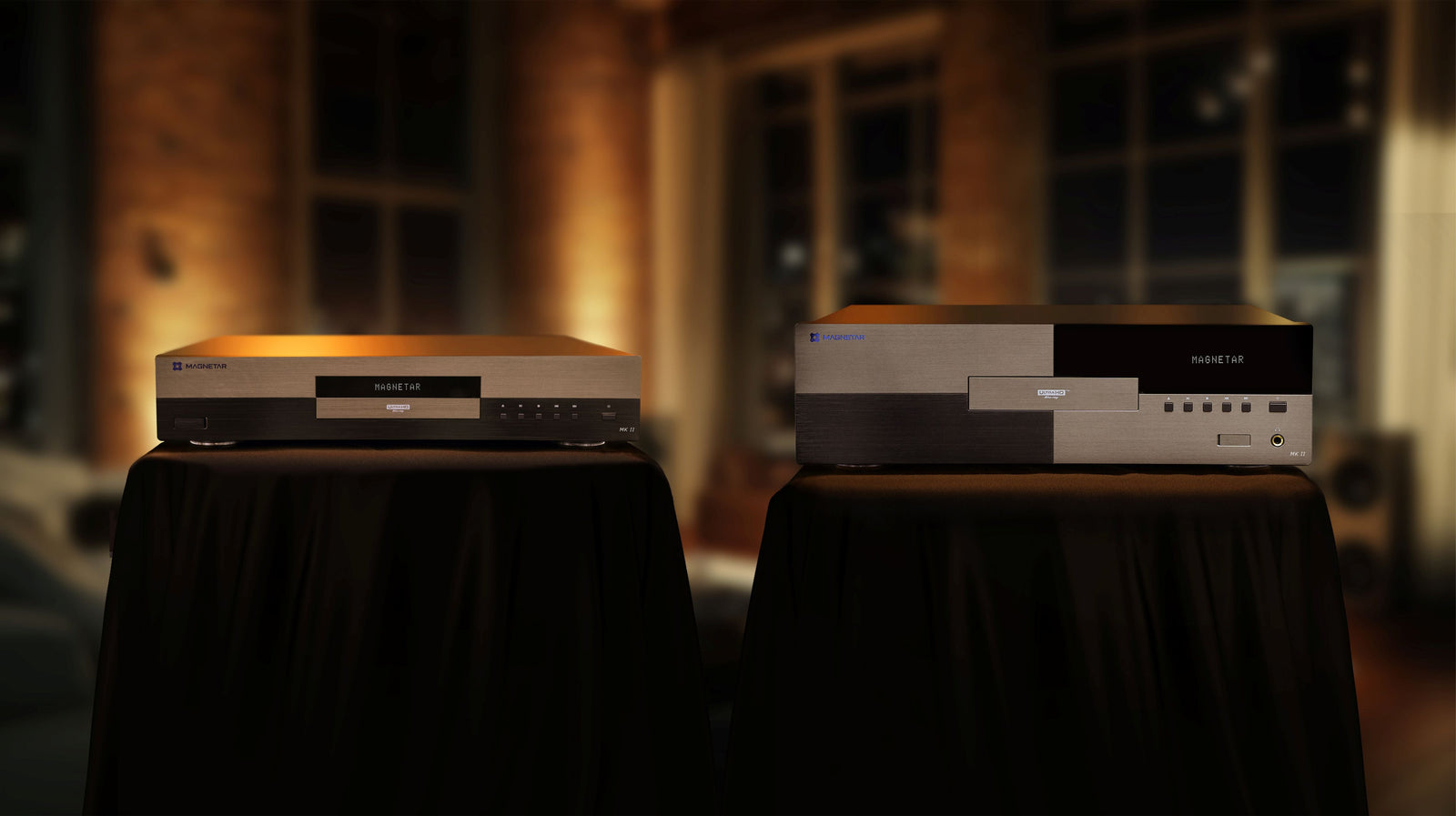
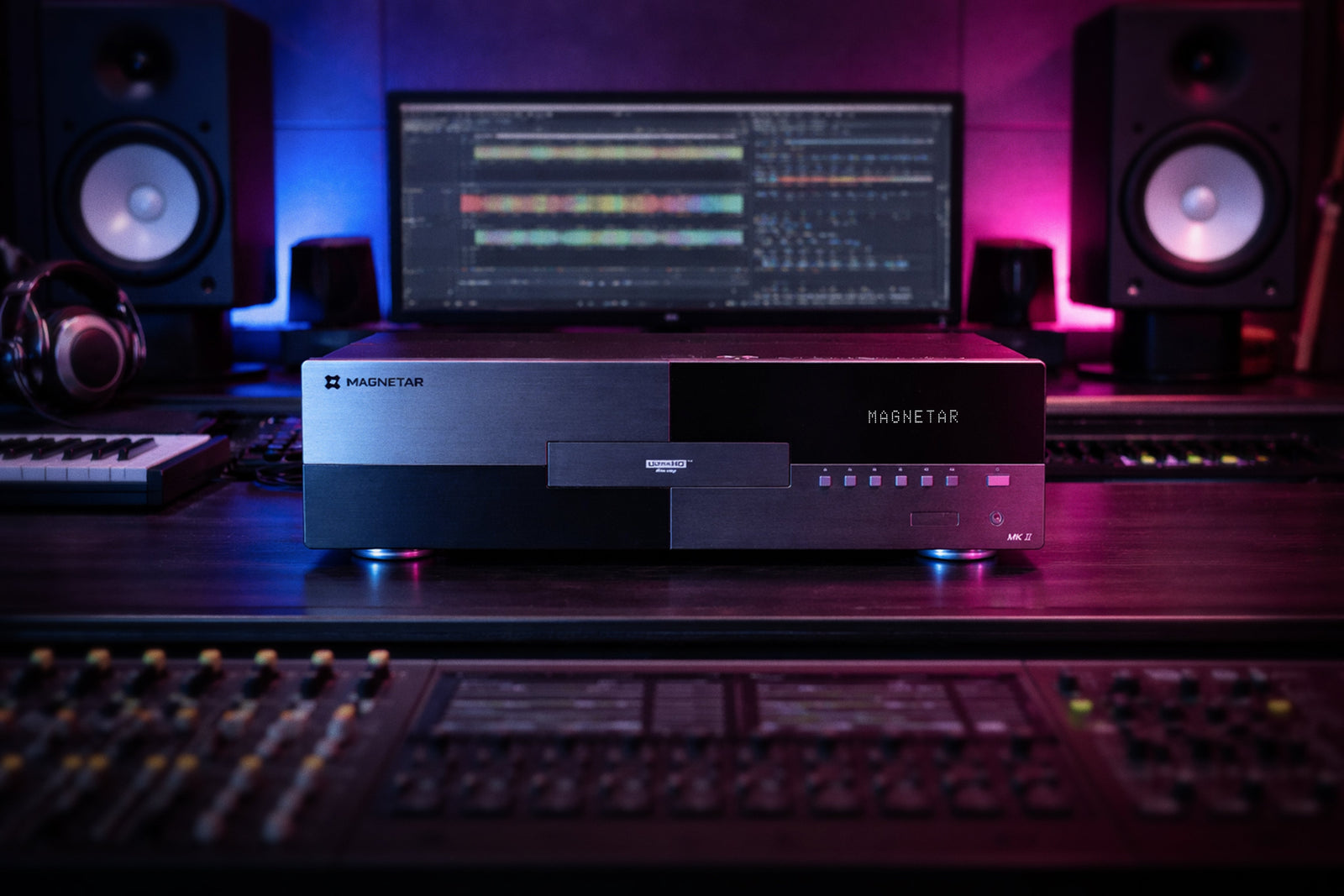
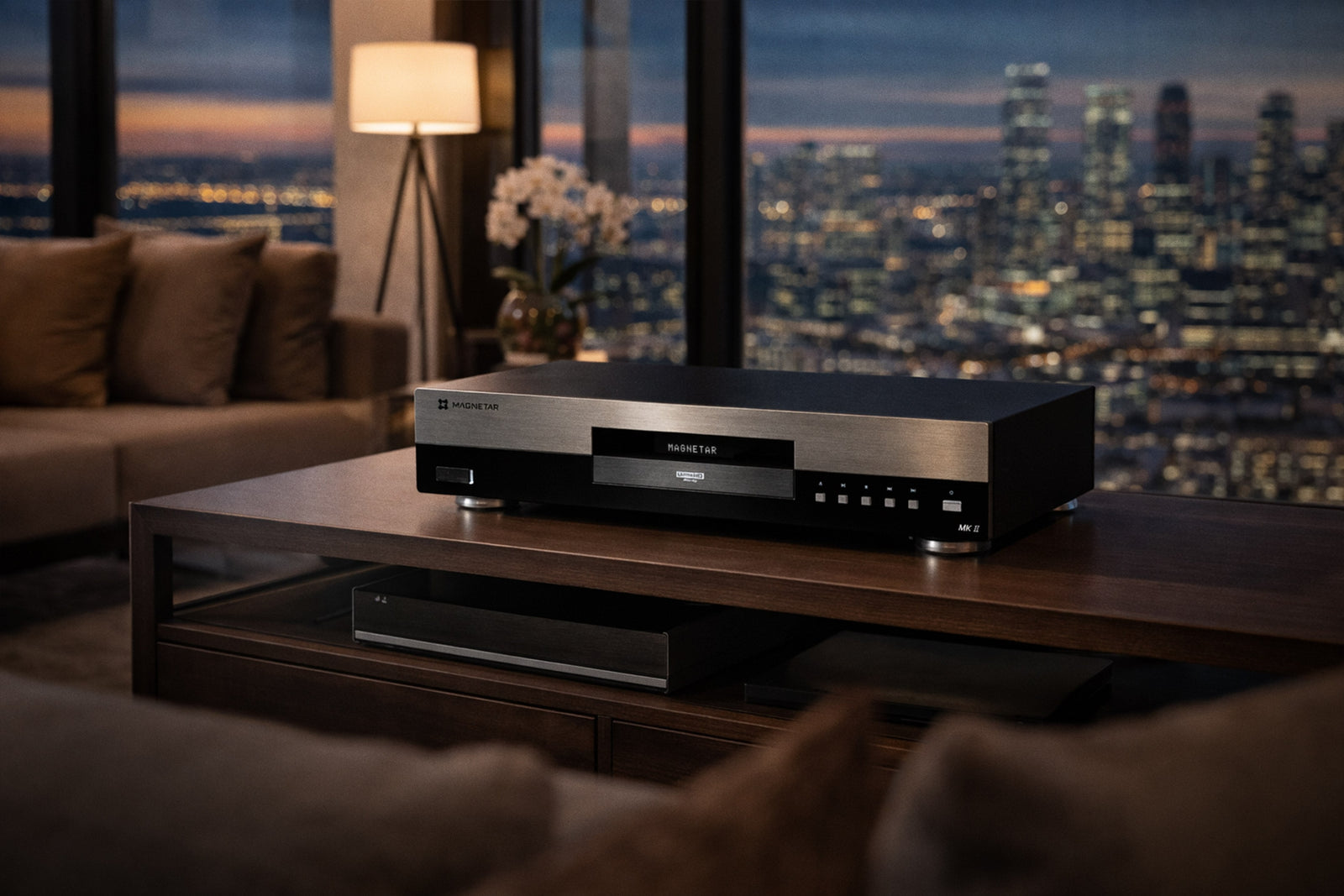
At Magnetar, we think about home theater from the perspective of the source. A universal disc player sits near the beginning of the signal chain, where information from your physical media begins its journey toward your display and speakers. The goal of a high-performance source component isn’t to compensate for every other element in the theater; rather, it's to perform its own role in that chain exceptionally well.
The same philosophy can be applied throughout a home theater. A great display should be allowed to display a great signal, a great audio system should be given a room and configuration that allow it to perform, a premium source should be connected to equipment capable of preserving and reproducing what it delivers.
When every component is allowed to do its job, the technology fades away and the movie takes its place. So before asking what your home theater needs next, take a look at what you already have.
*Follow the signal from beginning to end.
*Listen to the room.
*Check the settings.
*Look at the environment.
You may discover that the biggest improvement isn’t waiting inside of a new box, it could be hiding somewhere in the system you already own.