



Introduction: Analog Isn’t Old. It’s Flexible.
Given that HDMI, streaming, and wireless audio are certainly dominant today, the presence of analog outputs on a premium disc player might seem surprising. Many consumers assume analog connections are relics from a past generation of home entertainment, unnecessary in modern systems.
But in reality, analog outputs remain one of the most important features that distinguishes high-end universal disc players from mass-market alternatives.
Rather than being outdated, analog connectivity represents flexibility, control, and audio quality. It allows a disc player to function not just as a transport, but as a complete high-performance audio component capable of integrating into a wide range of systems, from modern home theaters to dedicated two-channel listening rooms.
Understanding why high-end players continue to include analog outputs reveals a deeper truth about premium audio design: signal path matters.

What Are Analog Outputs on a Disc Player?
Analog outputs convert digital audio into an electrical signal that can be amplified and played through speakers.
This conversion is handled by an internal component called a Digital-to-Analog Converter (DAC).
Most premium players provide:
- Stereo RCA outputs
- Balanced XLR outputs (on higher-end models)
- Multi-channel analog outputs for surround audio
Instead of sending a digital signal to an external receiver or processor, the player performs the decoding and conversion internally, then delivers a finished analog signal ready for amplification.
In other words, the player becomes the heart of the audio chain.
The DAC Advantage: Why Internal Conversion Matters
The quality of a DAC dramatically affects sound.
High-end disc players often include superior DAC architectures compared to those found in many AV receivers. This allows:
- More precise detail retrieval
- Lower noise floor
- Better channel separation
- More natural dynamics
When using analog outputs, listeners are effectively choosing the player’s DAC instead of the receiver’s DAC.
For music playback, particularly CD, SACD, and high-resolution audio, this can produce a noticeable improvement in realism and depth.
This is one reason audiophiles frequently connect premium players directly to stereo amplifiers via analog connections.
SACD and High-Resolution Audio: Analog Is Often Essential
Analog outputs are especially important for formats like SACD and DSD audio.
Due to copy-protection and format limitations, some systems cannot easily pass native high-resolution audio digitally. Analog outputs allow the player to perform the necessary conversion internally and deliver the full quality signal without compatibility issues.
This enables:
- Native SACD playback in stereo systems
- High-resolution multi-channel audio without specialized processors
- Greater consistency across different equipment setups
For collectors with large SACD libraries, analog connectivity isn’t optional, it’s fundamental.
System Flexibility: Supporting More Than One Type of Setup
One of the defining strengths of a universal disc player is its ability to serve multiple roles.
Analog outputs make that possible.
They allow the same player to integrate with:
- Modern HDMI home theaters
- Vintage stereo systems
- Dedicated two-channel audiophile rigs
- Headphone amplification chains
- Secondary listening rooms
This flexibility extends the lifespan of the player and reduces the need for additional components.
Instead of being locked into a single ecosystem, owners can adapt their system over time while keeping the same source component.
That longevity is a core principle behind premium design.
Balanced Outputs: Noise Reduction and Performance
Higher-end players often include balanced XLR analog outputs, a feature more commonly associated with professional audio equipment.
Balanced connections provide:
- Improved noise rejection
- Longer cable runs without signal degradation
- Greater dynamic headroom
- Enhanced channel separation
In carefully designed systems, balanced analog connections can deliver measurable and audible benefits.
Their inclusion signals that the player is engineered not only for convenience but for performance at the highest level.
Multi-Channel Analog: A Quietly Powerful Feature
Multi-channel analog outputs remain one of the most underrated capabilities of premium disc players.
They allow surround audio to be decoded inside the player and sent directly to amplifiers or processors, even if those devices lack modern format support.
This enables:
- Legacy processor compatibility
- SACD and high-resolution surround playback
- Greater control over bass management and channel routing
For enthusiasts maintaining long-term systems, multi-channel analog connectivity provides a bridge between generations of technology.
Analog Outputs and Signal Path Control
One of the biggest advantages of analog connectivity is control.
When audio conversion occurs inside the player, listeners reduce variables in the signal chain. This can minimize additional processing, resampling, or noise introduced by downstream components.
For music-focused listening, a simplified signal path often results in:
- Greater clarity
- More coherent imaging
- Improved tonal consistency
This is why many audiophiles prioritize source quality above all else.
The player becomes the foundation.
Why Mass-Market Players Often Remove Analog Outputs
The absence of analog outputs in entry-level players is usually driven by cost and product positioning.
High-quality DAC stages, power supplies, shielding, and analog circuitry require careful engineering. Removing these elements reduces manufacturing complexity but also limits performance and flexibility.
Premium players retain analog connectivity because they are designed as long-term components rather than disposable devices.
In that sense, analog outputs are less about nostalgia and more about capability.
The Bigger Picture: Universal Players as Audio Components
Including analog outputs reflects a broader philosophy: a universal disc player should function as more than a movie playback device.
It should serve as:
- A reference music source
- A format bridge across decades
- A stable platform for physical media collections
- A central hub for digital and disc-based listening
Analog connectivity is what allows that vision to exist in practice.
It transforms the player from a transport into a complete source component.
Conclusion: Analog Is About Possibility
Analog outputs persist in high-end disc players because they expand what a system can do.
They provide access to superior DAC performance, enable high-resolution audio playback across more setups, support legacy equipment, and offer greater control over the signal path.
Most importantly, they future-proof the listening experience. As systems evolve, analog connectivity ensures the player remains relevant.
In a landscape increasingly defined by convenience, features like analog outputs remind us that premium design is ultimately about choice.
And choice is what allows physical media enthusiasts to build systems that reflect how they truly want to listen.
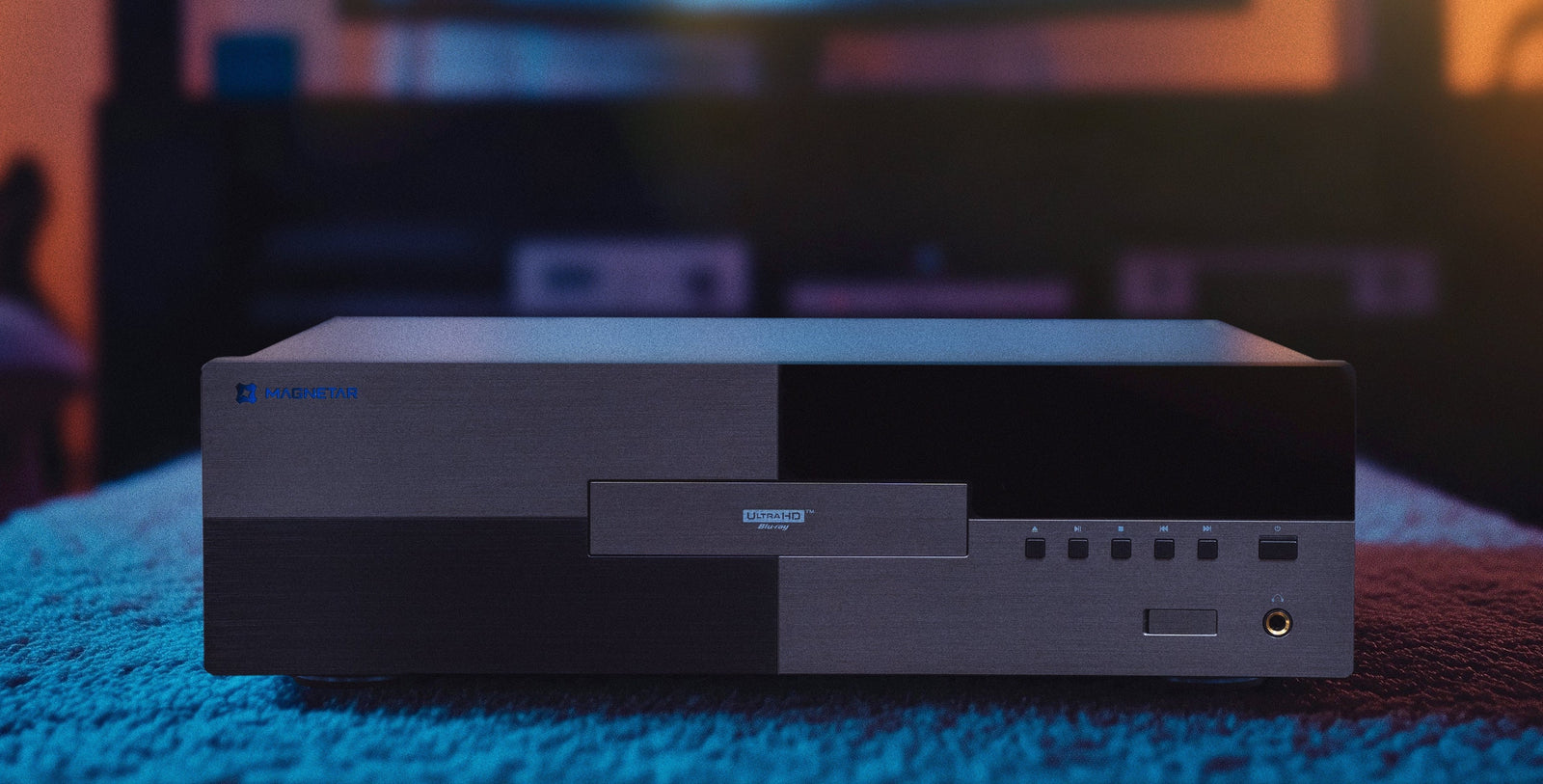
Thoughtfully engineered universal disc players, like those offered byMagnetar, are built to integrate seamlessly into both modern and traditional audio systems. By combining advanced digital processing with carefully designed analog stages, they offer collectors the flexibility to enjoy their libraries without compromise, today and for years to come.