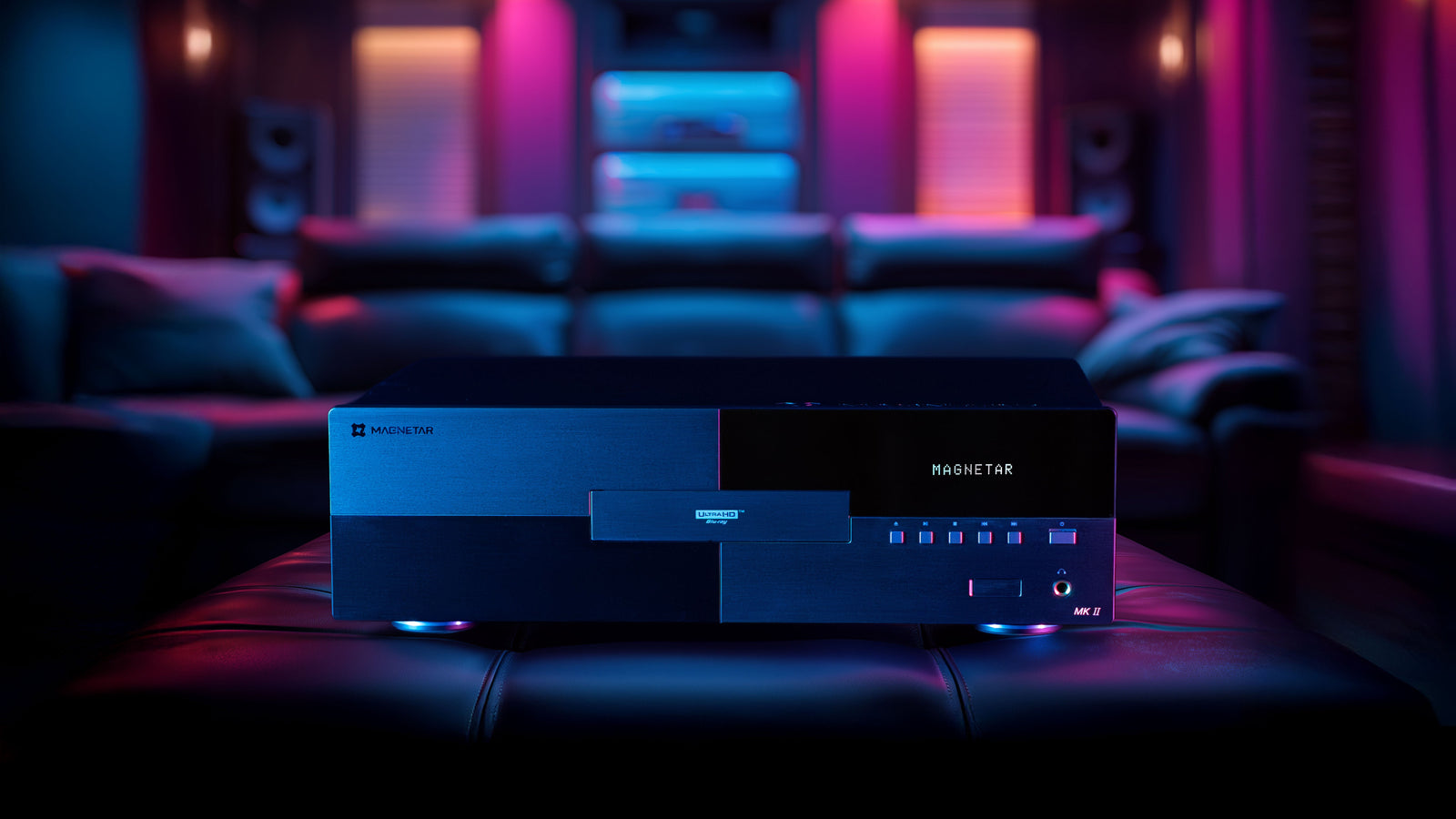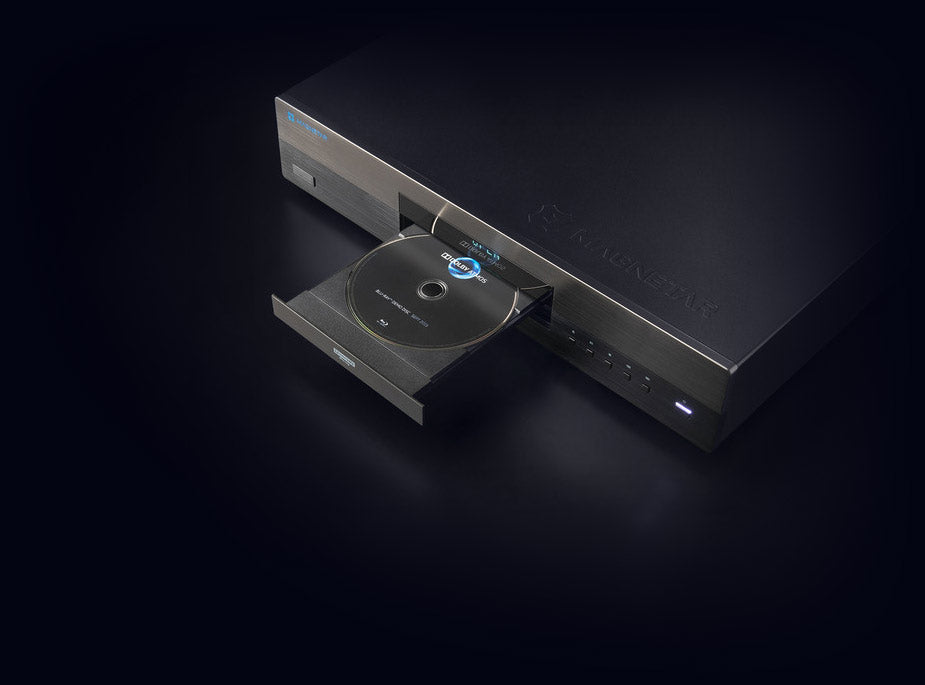




It's no secret that in today’s home entertainment landscape, choice is abundant. Disc players exist at nearly every price point, from budget-friendly models designed for accessibility to premium components engineered for serious home cinema systems. At a glance, many of these players appear to accomplish the same task: they play discs.
But playback is only the beginning.
Behind every disc player lies a series of decisions; choices about materials, engineering priorities, longevity, and purpose. Those decisions determine not just whether a disc plays, but how reliably it plays, how consistently it performs across systems, and how well it holds up over time. Understanding these decisions is key to understanding the true value of a disc player.
At Magnetar, we believe physical media deserves transparency. This is not a conversation about “good” versus “bad” products, nor is it an argument against affordability. Budget players play an important role in keeping physical media accessible. Instead, this is an exploration of where compromises are commonly made, why those compromises exist, and why Magnetar chooses a different path.

Every Disc Player Is a Series of Trade-Offs
No piece of consumer electronics is created without compromise. Manufacturing costs, component sourcing, development timelines, and market expectations all influence final design decisions. To reach a particular price point, something must give. Budget disc players often prioritize accessibility. They are designed to deliver basic functionality at the lowest possible cost, allowing more people to enjoy physical media. This goal is both valid and necessary. Without entry-level options, the physical media ecosystem would be far smaller and less sustainable.
However, affordability comes from prioritization. When costs are constrained, manufacturers must choose where to invest and where to simplify. These choices shape everything from performance consistency to product lifespan.
Magnetar begins with a different question. Rather than asking how much can be removed, Magnetar asks what the content requires to be presented faithfully, consistently, and reliably over time.
⸻
Where Budget Players Typically Save Money
Understanding the cost of compromise means looking honestly at where savings are commonly achieved. These design decisions are not inherently negative; they are simply reflections of a product’s goals.
Power Supply Design
One of the most significant areas of cost reduction in budget players is the power supply. Simpler power architectures are less expensive to produce and easier to integrate, but they can introduce instability that affects the entire system. Power quality influences every aspect of a player’s operation. Inconsistent or insufficient power regulation can lead to variability in processing, increased noise, and reduced long-term reliability. While these effects may not always be immediately obvious, they can accumulate over time, particularly in complex home theater environments.
Simplified Signal Paths
To reduce development costs, many budget players employ simplified signal paths. These designs can perform adequately under ideal conditions, but they often lack the robustness needed for consistent results across a wide range of displays, formats, and discs. The result is a player that functions, but one that may behave differently depending on the content or system it is connected to. Predictability becomes less certain.
Component Selection
Internal components matter more than many consumers realize. Clocking accuracy, output stages, thermal management, and internal shielding all play roles in how consistently a player performs. In budget designs, components are often selected to meet minimum requirements rather than exceed them. This approach controls costs, but it can limit long-term performance stability and reduce tolerance for demanding playback scenarios.
Product Life Cycle and Support
Another common area of compromise is product longevity. Shorter product cycles and limited firmware support allow manufacturers to move quickly and reduce ongoing development costs. However, this often shifts the burden to the consumer, who may feel pressure to replace hardware more frequently. These decisions are not mistakes, they are trade-offs. They define what a product is designed to do, and just as importantly, what it is not designed to do.
⸻
Why Magnetar Chooses a Different Path
Magnetar’s design philosophy is rooted in the belief that physical media is worth preserving; not just as a format, but as an experience. That belief influences every engineering decision.
Rather than designing to a price point, Magnetar designs to a performance standard. This means prioritizing stability, consistency, and longevity, even when those priorities demand more disciplined engineering and higher production costs.
Stability Over Feature Chasing
Magnetar players are built to behave consistently in real-world systems. Stability is treated as a core feature, not a secondary benefit. This approach reduces variables. When a player performs predictably across different discs, displays, and audio systems, it becomes a reliable foundation rather than a potential source of uncertainty.
Signal Integrity as a Guiding Principle
Preserving signal integrity is central to Magnetar’s approach. The goal is not to enhance content or impose a sonic or visual signature, but to deliver what is already present on the disc as accurately as possible. When signal paths are carefully managed and power delivery is stable, the player effectively disappears. The focus shifts away from the hardware and onto the film itself.
Longevity as a Design Goal
Magnetar products are designed with the expectation that they will remain in use for years. This long-view approach influences everything from thermal design to firmware strategy.
Instead of constant reinvention, Magnetar emphasizes refinement. Updates are made thoughtfully, with an emphasis on stability and long-term usability rather than rapid feature turnover.
⸻
Why These Choices Matter for Collectors
For collectors, physical media is more than entertainment; it is an archive. Disc libraries often represent decades of careful curation, spanning multiple formats and eras.
A disc player must respect that investment.
Magnetar players are engineered to support broad format compatibility and consistent playback behavior across large libraries. Whether revisiting legacy DVDs, Blu-ray titles, or modern Ultra HD Blu-ray releases, collectors can trust that their hardware will present content reliably.
This trust reduces friction. It allows enthusiasts to focus on discovery and enjoyment rather than troubleshooting or uncertainty.
⸻
The Hidden Cost of “Good Enough”
One of the most overlooked costs in consumer electronics is erosion of confidence. Many hardware upgrades are not driven by outright failure, but by fatigue.
When a player behaves inconsistently, requires frequent workarounds, or feels unpredictable, trust slowly diminishes. Over time, even a functioning device can feel inadequate; not because it no longer works, but because it no longer inspires confidence.
Magnetar’s philosophy seeks to eliminate that erosion. By prioritizing reliability and predictability, the ownership experience becomes calmer and more satisfying. The player becomes a stable reference point within a system that may otherwise evolve.
⸻
Physical Media Deserves Reliable Hardware
Studios invest enormous effort into restoring films. Boutique labels dedicate themselves to preserving original presentations. Displays and audio systems continue to advance rapidly. The disc player is the final interpreter in this chain.
If that final link introduces variability or compromise, the entire experience is diminished. Magnetar exists to ensure that the final step honors the work that precedes it.
⸻
Who Magnetar Is (and Is Not) For
Magnetar does not attempt to be everything to everyone. Budget players serve an important purpose, and for many viewers, they are the right choice.
Magnetar is designed for those who:
• Value consistency over novelty
• Build systems with intention
• Maintain long-term media libraries
• Prefer reliability over constant upgrading
By clearly defining its role, Magnetar earns trust. Enthusiasts know exactly what they are investing in and why.
⸻
Conclusion: Understanding the Value of Fewer Compromises
The difference between disc players is not about luxury. It is about philosophy.
Every product reflects the compromises its creators chose to make. Budget players prioritize accessibility. Magnetar prioritizes preservation.
By choosing disciplined engineering, long-term stability, and transparency over shortcuts, Magnetar supports physical media not as a fleeting trend, but as a lasting medium. When you invest in great films, the hardware that plays them should honor that investment consistently, quietly, and without compromise.