

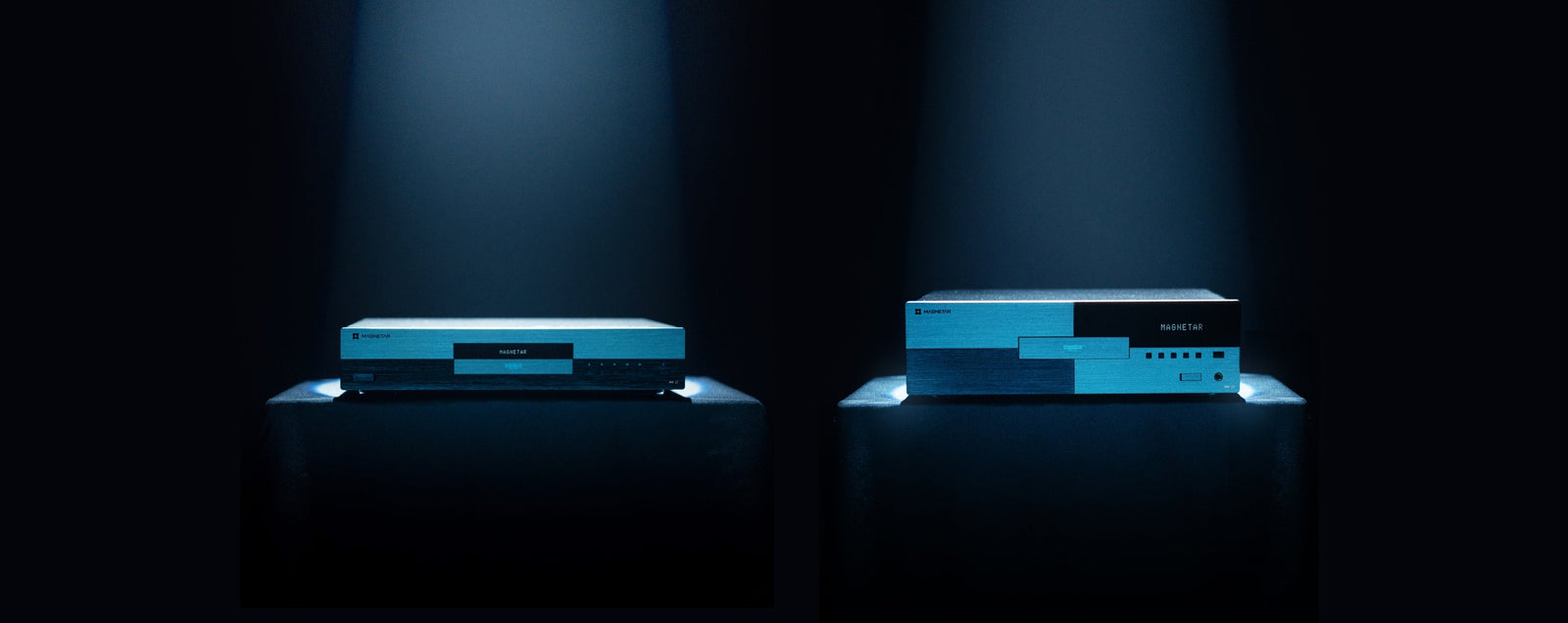

Introduction: Why Stress Testing Matters for High-End Disc Players
Our daily lives are filled with sleek gadgets and disposable tech, making it easy to forget the amount of engineering that goes into devices designed to last. But with high-end disc players—especially ones built for reference-quality audio and video—rigorous testing isn’t optional. It’s essential.
Physical media enthusiasts demand reliability. They want a player that boots up perfectly every time, reads discs flawlessly, handles aging collections with grace, and performs like a precision instrument years into the future. That kind of performance doesn’t happen by accident.
It happens because of testing.
At Magnetar, every player must pass a series of stress tests, endurance trials, and quality-verification procedures that push the hardware far beyond typical real-world use. These tests exist for one reason: to make sure the unit you bring home is robust enough for a lifetime of flawless playback.
This blog pulls back the curtain on the Magnetar lab—showing you the tests, why they matter, and how they help shape the MKII generation.
 ⸻
⸻
1. Heat Cycling: Surviving Extreme Temperature Swings
Disc players generate heat. Not a lot—but enough that the chassis, drive assembly, and internal components must handle temperature changes without losing performance or introducing noise.
What Does Heat Cycling Involve?
Magnetar players undergo cycles that move between:
• Low, near-storage temperatures
• Elevated temperatures beyond normal playback conditions
• Rapid transitions between both
This mimics years of real-world use in:
• Closed cabinets
• Warm home theaters
• Cooler winter environments
• “Power on / power off” daily routines
Why It Matters:
Thermal stability affects:
• HDR performance
• Drive precision
• Internal clock accuracy
• Long-term part reliability
• Mechanical tolerances
By exposing the player to climate extremes, Magnetar ensures that day-to-day conditions—even less-than-ideal ones—won’t compromise performance. If components shift or degrade under heat stress, the player never makes it out of the lab.
⸻
2. Vibration + Shock Testing: Protecting the Disc and the Data
One of the most underrated elements of high-end playback is mechanical stability. Discs spin at high speeds. Any vibration—no matter how small—can introduce:
• Jitter
• Read errors
• Picture instability
• Audio micro-noise
• Increased wear over time
To best prevent this, Magnetar subjects each design to vibration and shock simulation.
What’s Tested:
• Vertical vibration
• Horizontal vibration
• Mechanical shock (like micro-impacts from shipping or installation)
• Resonance testing within the chassis
The goal is to ensure that the transport mechanism stays quiet, stable, and precise—even when exposed to the kinds of small vibrations you never realize are present in the average home theater setup.
What This Means for You:
• Quieter disc handling
• Lower jitter
• Reduced risk of read errors
• Cleaner audio output
• Better HDR stability
• Longer disc drive life
This is the reason Magnetar players feel “rock solid” during operation—the internal damping and chassis design have been refined through countless vibration trials.
⸻
3. Continuous Playback Endurance: 24–72 Hour Stress Runs
Durability isn’t something you can simulate on paper. You have to run the machine.
Magnetar performs long-duration playback tests that run:
• Multiple disc formats
• Different resolutions (DVD, Blu-ray, 4K UHD)
• Repeated layer changes
• Subtitle toggles
• Menu loops
• Audio mode switches
This isn’t a quick test. It’s long, repetitive, and intentionally grueling.
Why This Test Exists:
Real home theaters don’t just play short reference clips—they play movies, concerts, box sets, and marathons. Over years, that adds up to thousands of hours.
The endurance test is designed to reveal:
• Heat creep issues
• Long-term firmware instability
• Mechanical noise that appears over time
• Component fatigue
• Transport alignment drift
If anything degrades after tens of hours of continuous use, Magnetar engineers address it long before the product ever reaches customers.
⸻
4. Disc Stress Testing: Making Sure Every Format Plays Perfectly
Magnetar players are known for wide disc compatibility, but supporting multiple formats means accommodating discs with:
• Different thicknesses
• Different data densities
• Different reflectivity
• Different tolerances
Working to achieve flawless compatibility, players are tested with a large library of real discs, including:
• UHD Blu-ray
• Blu-ray
• DVD
• CD
• SACD
• DVD-Audio
• Burned media
• Older, worn, or imperfect discs
Why This Matters:
Collectors own discs across decades and regions. Some are pristine. Others… not so much.
Magnetar’s disc library includes:
• Lightly scratched discs
• Slightly warped discs
• Discs with fingerprint smudges
• Boutique label restorations
• Lab test discs with specific patterns
The idea is simple:
If a disc is playable, Magnetar wants to play it.
⸻
5. Power Stability + Electrical Noise Testing
Clean, stable power is essential for maintaining consistent video and audio performance.
Magnetar tests players against:
• Voltage fluctuations
• Electrical noise
• Grounding inconsistencies
• High-frequency interference
• Sudden power loss
These tests help prevent issues like:
• Color shifts
• Audio dropouts
• HDMI handshake failures
• Sudden reboots
• Banding in HDR content
The MKII generation received additional refinements in power regulation to maintain signal purity even when wall power isn’t perfect.
⸻
6. HDMI + Handshake Testing Across Dozens of Setups
Home theaters vary wildly. Your player must communicate cleanly with:
• Older TVs
• New 4K and 8K models
• High-end projectors
• AVRs from multiple manufacturers
• Soundbars
• Switchers
• Capture devices
Magnetar tests HDMI handshake behavior under dozens of combinations to ensure:
• Consistent HDR10/Dolby Vision recognition
• Stable EDID communication
• Minimal resync delays
• Compatibility across generations
This is why Magnetar players have a reputation for being “rock solid” with nearly every setup they’re plugged into.
⸻
7. Button + Remote Reliability Tests:
Remote responsiveness and physical button durability might seem simple, but they matter.
Magnetar performs:
• Tens of thousands of button presses
• Range and angle testing on the IR receiver
• Repetition tests on the tray mechanism
• Long-term standby/wake trials
This prevents everyday annoyances like:
• Sticking buttons
• Unresponsive remotes
• Slow wake times
Even the tactile click of each button is refined through repeated trials.
⸻
8. Cabinet + Weight Distribution Tests
Magnetar players are heavy for a reason: stability.
But weight must be:
• Evenly distributed
• Symmetrically balanced
• Supported by internal bracing
• Dampened to minimize resonance
The result is the signature “Magnetar feel”: solid, quiet, and grounded.
⸻
9. Aging Simulation: Recreating Years of Use in Weeks
To predict how a Magnetar player will behave after five or ten years, engineers simulate aging by:
• Repeated power cycling
• Component warm/cool cycles
• Environmental variations
• Long-duration playback loops
• Accelerated mechanical wear tests
This ensures long-term performance doesn’t drift.
Your player shouldn’t just work on day one. It should work beautifully on day 3,000.
⸻
Conclusion: Built for the Enthusiast Who Expects More
The stress tests Magnetar applies aren’t just checkboxes—they’re the backbone of the brand’s reputation. They ensure that every player that makes it into the world is:
• stable
• quiet
• precise
• durable
• consistent
• future-ready
While disposable electronics are extremely common today, Magnetar builds hardware designed to survive thousands of hours of use, extreme conditions, heavy disc libraries, and the demands of long-term home theater setups.
The MKII generation benefits directly from everything learned during these tests. It’s not a reinvented design—it’s a refined one, shaped by what only years of real testing can reveal.
And that’s why Magnetar players continue to stand out: not because they promise more, but because they prove more.