


Introduction: Why Physical Media Still Matters
We've become a culture of instant access. Any film or album can be streamed, and physical media is often portrayed as obsolete...a fading artifact of a pre-digital age. But that narrative, while convenient, is deeply incomplete.
Physical media has not disappeared. It has evolved, adapted, and repositioned itself into something more refined: a premium format defined by quality, permanence, and ownership.
To understand why physical media still matters, and why it continues to thrive, we need to step back and explore its extraordinary journey. From fragile wax cylinders to cutting-edge 4K Ultra HD discs, the story of physical media is one of constant innovation, cultural impact, and enduring value.

The Birth of Recorded Media: Capturing Sound for the First Time
The origins of physical media date back to the late 19th century, when the idea of capturing sound first became a reality. In 1877, Thomas Edison introduced the phonograph, a revolutionary device that recorded sound onto rotating wax cylinders. For the first time in history, human voices and music could be preserved and replayed.
Shortly thereafter, Emile Berliner advanced the concept with the gramophone, which used flat discs instead of cylinders. These discs were easier to manufacture and distribute, paving the way for the first commercial music industry.
These early formats were crude by modern standards, but they established a foundational idea that still resonates today:
Media could be owned, stored, and experienced repeatedly; on demand, without needing the original performance.
The Golden Age of Analog: Vinyl and Tape Take Over
By the mid-20th century, physical media had entered a golden age of innovation and cultural significance.
Vinyl records became the dominant music format, particularly with the introduction of the 33⅓ RPM long-playing (LP) record. These discs offered extended playback time, improved sound fidelity, and an entirely new canvas for artistic expression through album artwork.
At the same time, magnetic tape revolutionized both recording and playback. Reel-to-reel systems allowed studios to achieve unprecedented control over sound production, while compact cassette tapes brought portability to the masses.
When Sony introduced the Walkman in 1979, it fundamentally changed how people engaged with music. Listening became a personal, mobile experience—something that could accompany daily life rather than being confined to a living room stereo.
Physical media wasn’t just a storage format during this era—it became a cultural identity, shaping how people discovered, shared, and connected with music.
Bringing Movies Home: The VHS vs. Betamax Format War
The late 20th century marked another turning point: the arrival of home video. Two competing formats emerged: VHS and Betamax, each vying for dominance. Betamax, developed by Sony, offered superior image quality. VHS, however, ultimately won due to longer recording times, lower costs, and broader industry support.
This format war wasn’t just a technical battle, it reshaped how people consumed film.
For the first time, audiences could:
Watch movies on their own schedule
Build personal film libraries
Revisit favorite titles endlessly
Video rental stores became cultural landmarks, and the concept of owning films at home became normalized.
The VHS era proved something critical: convenience and accessibility can be just as important as technical superiority, but physical ownership remains central.
The Digital Leap: CDs, DVDs, and a New Standard of Quality
The transition from analog to digital marked one of the most significant evolutions in physical media history.
Compact Discs (CDs)
Developed by Sony and Philips, CDs introduced:
Digital audio with minimal degradation
Random track access
Greater durability than tape
They quickly became the global standard for music.
DVD (Digital Versatile Disc)
In the late 1990s, DVD transformed home video by delivering:
Sharper picture quality than VHS
Digital surround sound
Bonus features like commentaries and deleted scenes
DVD didn’t just improve quality, it introduced a new level of interactivity and engagement.
Another Format War: Blu-ray vs. HD DVD
Before Blu-ray became the standard, another format war unfolded in the mid-2000s: Blu-ray vs. HD DVD.
HD DVD, backed by companies like Toshiba, offered a familiar manufacturing process and lower costs. Blu-ray, supported by Sony and major studios, provided significantly greater storage capacity, essential for high-definition video.
When key studios and retailers aligned behind Blu-ray, the outcome became inevitable. HD DVD was discontinued, and Blu-ray emerged as the definitive high-definition format.
This moment reinforced a recurring theme in physical media history:
The winning format is not always the cheapest or simplest, but the one best positioned for the future.
The Pinnacle of Disc Technology: 4K Ultra HD
Today, physical media has reached its most advanced state with 4K Ultra HD Blu-ray.
This format represents the culmination of decades of technological progress, offering:
True 4K resolution (3840×2160)
High Dynamic Range (HDR), including Dolby Vision
Wide color gamut for richer, more accurate visuals
Lossless audio formats like Dolby Atmos and DTS:X
Bitrates that far exceed streaming platforms
While streaming services prioritize convenience and bandwidth efficiency, 4K UHD discs prioritize fidelity and accuracy.
The difference is not subtle. It’s the difference between compression and completeness; the difference between approximation and authenticity.
The Collector Renaissance: Boutique Labels and Premium Releases
One of the most compelling developments in recent years has been the rise of boutique physical media labels.
Companies like Arrow Video and Shout! Factory have redefined what physical media can be, focusing on:
High-quality restorations from original film elements
Exclusive bonus content and scholarly commentary
Limited edition packaging and collectible designs
These releases are not just products, they are curated experiences.
Collectors are no longer simply buying movies or albums. They are investing in definitive editions that celebrate the artistry and history behind the content.
This shift has transformed physical media from a mass-market necessity into a premium enthusiast-driven ecosystem.
Ownership in a Streaming World
Streaming has undoubtedly changed how media is consumed, but it has also introduced new limitations.
Licensing agreements can remove titles overnight. Content can be altered or replaced without notice. Libraries are controlled by platforms, not users.
Physical media offers a clear alternative:
Permanent ownership
Consistent quality
Independence from licensing changes
The digital landscape is defined by impermanence, and physical media provides something increasingly rare:
certainty.
Media Narratives vs. Market Reality
In recent years, headlines have frequently declared the “death” of physical media. These narratives often point to corporate restructuring as evidence of decline. But such interpretations can be misleading.
When a company like Disney reorganizes its internal distribution model, it may be shifting production responsibilities, not abandoning physical media altogether. Licensing agreements with partners like Sony ensure continued disc production and global distribution.
The reality is far more nuanced:
Physical media is no longer a mass-market default
But it remains highly profitable within enthusiast segments
And it continues to receive strong support from studios and labels
Understanding this distinction is critical. The format isn’t disappearing, it’s finding its optimal role.
The Importance of Playback: Where Quality Is Realized
As media quality has advanced, so too has the importance of playback hardware.
Modern formats like 4K UHD demand precision:
Accurate disc reading
Advanced video processing
High-quality audio output
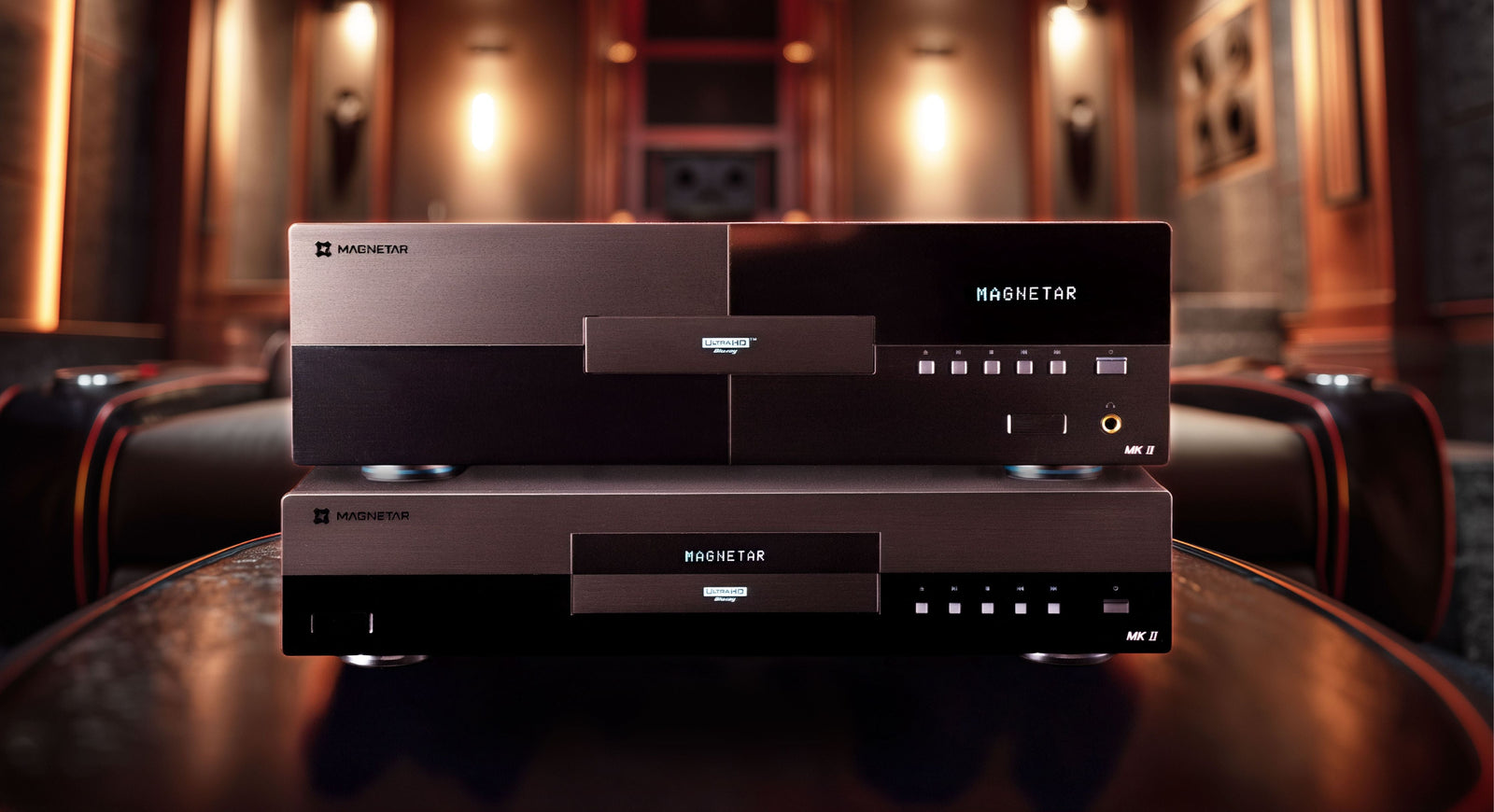
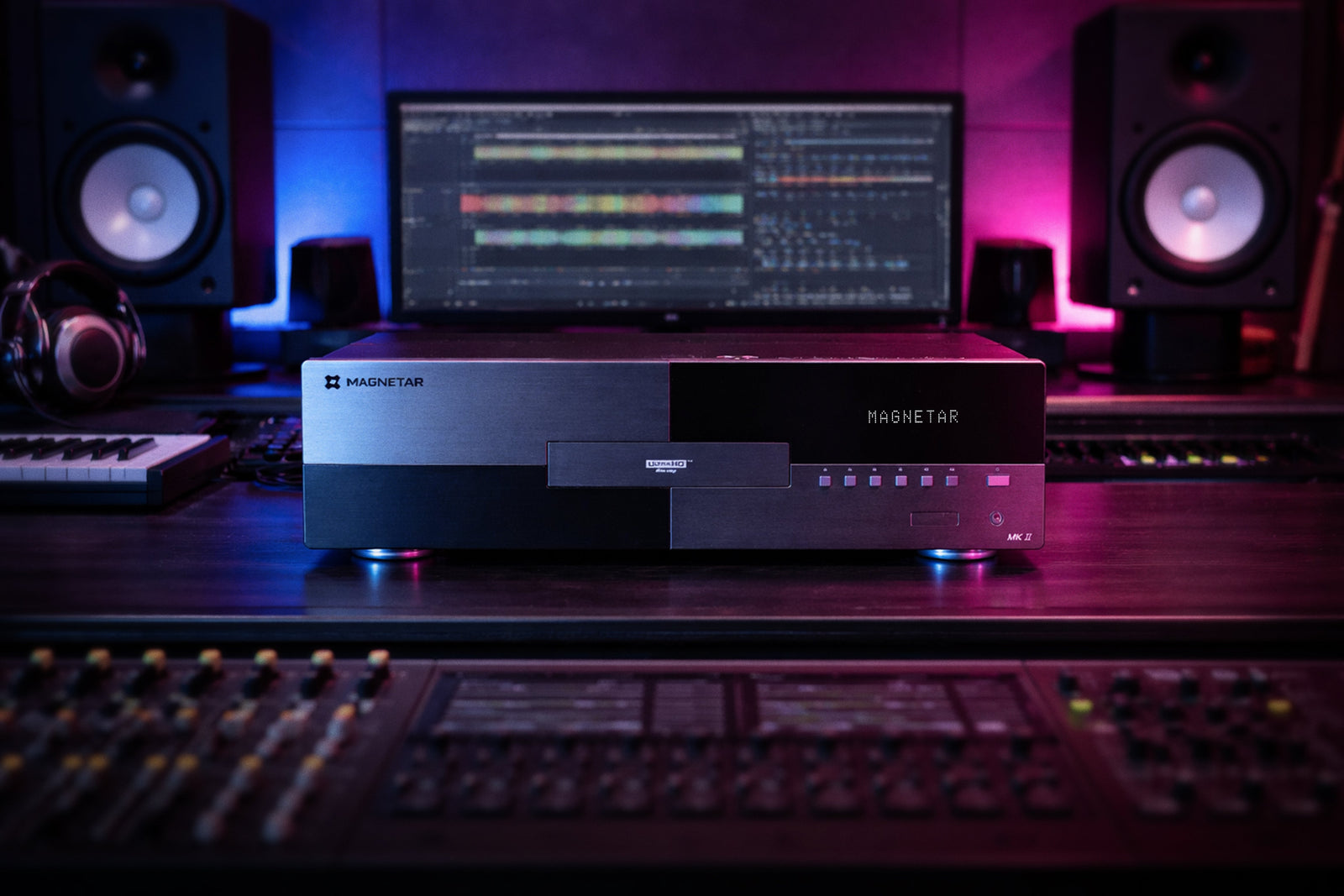
This is where premium players become essential. They are designed not just to play discs, but to fully realize the quality encoded within them.
In many ways, physical media represents potential, and hardware determines how much of that potential is actually experienced.
The Future of Physical Media: Refined, Not Replaced
Looking ahead, physical media is unlikely to return to its former mass-market dominance. But that doesn’t mean it is fading away.
Instead, it is evolving into something more focused and resilient:
A format for enthusiasts and collectors
A standard for archival quality
A benchmark for audio and video fidelity
As streaming continues to prioritize convenience, physical media will continue to represent the opposite:
intentional, high-quality engagement with content.
Conclusion: A Legacy That Continues to Evolve
From the earliest wax cylinders to modern 4K Ultra HD discs, physical media has undergone a remarkable transformation.
It has survived technological revolutions, adapted to changing consumer habits, and continuously redefined itself in response to new challenges.
And today, it stands not as a relic, but as a refined, premium format that offers something digital alternatives cannot fully replicate.
While digital media is increasingly intangible, physical formats remain grounded; delivering reliability, fidelity, and a deeper connection to the content we love.
For those who seek not just to watch or listen, but to truly experience, physical media remains the gold standard.
Here at Magnetar, we believe that when paired with the right equipment, the physical media experience becomes something even more powerful:
a true reflection of what the creators intended.